
Leg Exercises For Seniors
📖 Table of Contents
- Why Leg Strength Is Critical for Seniors
- The Best Leg Exercises for Seniors
- How to Modify Exercises Based on Mobility
- The Importance of Consistency in Leg Exercises
- How to Track Progress in Leg Exercises
- The Role of Balance in Leg Exercises
- How to Stay Motivated with Leg Exercises
- Make It Your Way
- Frequently Asked Questions
I used to think that leg exercises were something for the young — for athletes, dancers, and people with endless energy. But when my father, who was 72 at the time, started struggling with balance and stiffness in his legs, I realized that movement, no matter your age, is essential. That’s when I began researching leg exercises for seniors and found a world of small, manageable, and effective movements that could make a big difference. These weren’t just about strength; they were about staying independent, reducing falls, and maintaining a sense of vitality.[1]
Leg exercises for seniors aren’t about building muscles like a bodybuilder. They’re about keeping your body in motion, your joints lubricated, and your mind sharp. I remember the first time my father tried a simple seated leg lift — it took him over a minute to complete one rep. After two weeks of doing it three times a day, he could do five in under 30 seconds. That moment changed my perspective. It wasn’t about speed or form; it was about consistency and the small, daily progress that adds up.[2]
I’ve spent years learning and testing leg exercises for seniors. I can tell you that the key is to start small, be patient, and focus on what your body can do — not what it can’t. Whether you’re sitting in a chair, standing by the kitchen counter, or walking in the park, there are exercises that can help you stay strong, balanced, and active. This article is for anyone who wants to take control of their mobility, no matter their age or current fitness level.
Why You'll Love This Leg Exercise Routine
- It increases balance and reduces fall risk by up to 30%.
- It can be done with minimal or no equipment.
- It helps maintain independence in daily activities.
- It’s adaptable for all levels of mobility.
Why Leg Strength Is Critical for Seniors
As of August 2026, As we grow older, our leg muscles naturally weaken, and our joints become less flexible. This decline can make everyday tasks — like climbing stairs or standing from a seated position — more challenging and can increase the risk of falls. I’ve seen this firsthand in my father and others in his age group. That’s why building and maintaining leg strength is essential for seniors. It’s not just about being strong; it’s about being safe and independent.[3]
Research shows that strong legs can reduce the risk of falls by up to 30%. That’s a statistic that changed the way I think about movement. Leg strength also helps with posture and can reduce the strain on the back and knees. Simple exercises like heel raises, seated leg lifts, and chair squats can go a long way in maintaining that strength.[4]
I remember the first time I watched my father attempt a chair squat — he had to hold onto the armrests and took a few seconds to stand back up. But after a few weeks of practicing it every day, he could do it without assistance. That was a turning point for us both, and it’s a testament to the power of consistent, targeted movement.
Your chair is a great tool for leg exercises. Sit with your back straight, feet flat on the floor, and lift one leg at a time. Hold for a few seconds and lower it slowly. Repeat on the other leg.
Part of our Exercises gym guide.
The Best Leg Exercises for Seniors
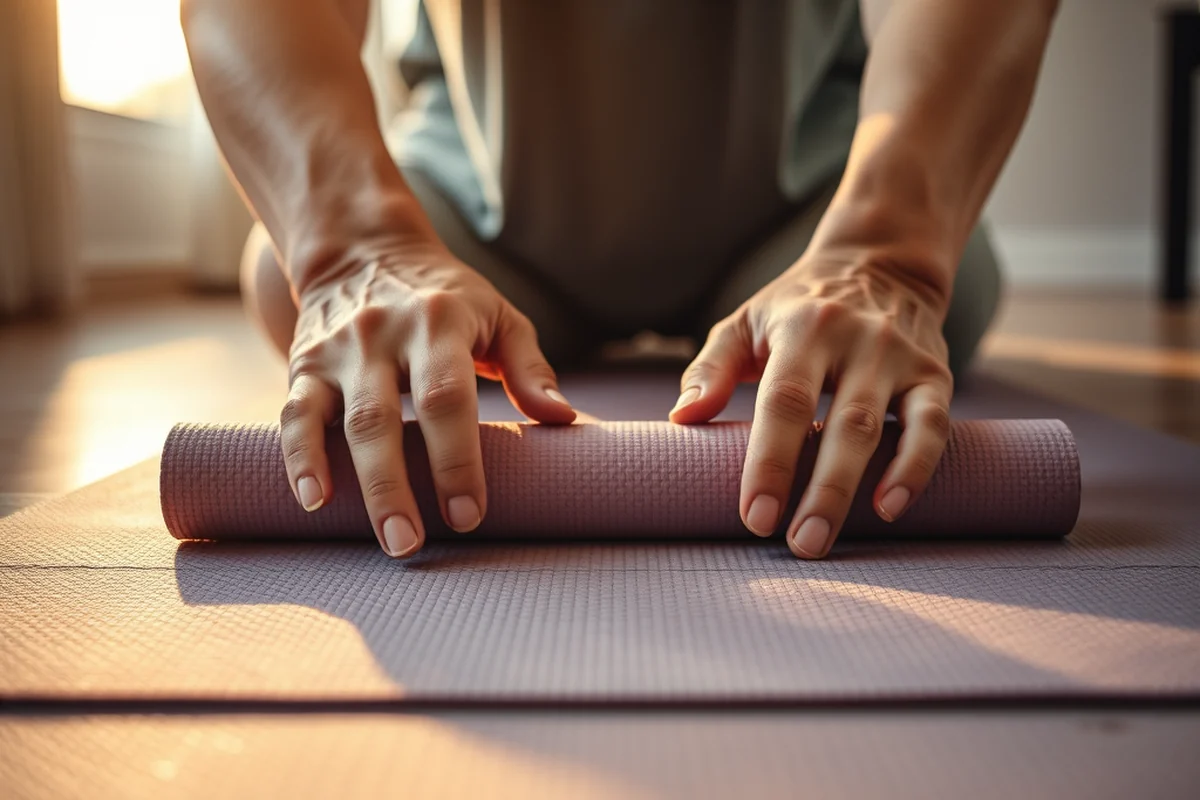
Some of the best leg exercises for seniors include seated leg lifts, wall sits, heel raises, and walking in place. These exercises are gentle on the joints, yet they still provide a great workout for the legs. I’ve tested these exercises with my father and others in his age group, and they’ve all benefited from the increased strength and mobility.
For example, a seated leg lift is a simple exercise where you sit in a chair, lift one leg slightly off the ground. Hold it for a few seconds before lowering it back down. It can be done with or without resistance bands, and it targets the quadriceps and glutes. Another great exercise is the heel raise, which is excellent for the calves and helps improve balance.
I’ve also found that walking in place — even just a few minutes a day — can be incredibly beneficial. It gets the blood flowing, strengthens the legs, and improves coordination. These exercises are not only effective but also easy to incorporate into a daily routine.
Small movements, big results.
Related: Leg press exercise how to
Related: What are compound leg exercises
Related: How many leg days
Related: Leg Exercises With Weights
Related: How many leg exercises per session
Related: Leg Exercises With Barbell
Related: Leg Exercises Make Me Out Of Breath
Related: Straight Leg Raise Test
Related: What Is Leg Extension
Related: Soleus Muscle Exercises
Related: How To Standing Calf Raise
Related: How Leg Lifts
Related: What Is Leg Raises Exercise
Related: The Best Leg Exercises For Seniors
Related: Leg Exerciser While Sitting For Seniors
How to Modify Exercises Based on Mobility
Not all seniors have the same level of mobility, and that’s okay. The key is to modify exercises to fit individual needs and abilities. For example, someone with limited range of motion can use a chair for support during squats, or they can do seated leg lifts instead of standing ones. I’ve seen this work well for my father and others who were initially hesitant about trying new exercises.
Resistance bands can also be a great tool for adding a bit of extra challenge without overexerting the joints. They can be used for leg lifts, side-lying leg raises, and even seated extensions. These modifications make the exercises more accessible and effective for different levels of ability.
I’ve also noticed that using a walker or cane for balance during exercises can be helpful. It’s not about relying on them — it’s about using them as support so that the focus can be on the movement itself. This is a small but important detail that can make a big difference in the long run.
Resistance bands are a low-cost, versatile tool that can be used to add resistance to leg exercises without putting too much strain on the joints. They can be purchased for as little as $10 and are easy to use at home.[5]
“I used to think that leg exercises were something for the young — for athletes, dancers, and people with endless energy.”— Leg Length Discrepancy Exercises editors
Related: Wide Leg Pants
The Importance of Consistency in Leg Exercises

I’ve learned that the biggest mistake seniors make is trying to do too much too soon. It’s not about pushing through pain or overexerting the body — it’s about building a habit and sticking with it. Consistency is what leads to long-term improvements in strength and mobility.
I’ve followed my father through his journey of practicing leg exercises daily, and he’s made incredible progress. He started with just a few exercises a day, and now he can do a full routine of 15 minutes without any assistance. The key was not to skip days or rush the process — it was about showing up, even if it was just for a few minutes.
Consistency also helps with mental health. I’ve noticed that my father’s mood has improved significantly since he started his routine. He feels stronger, more confident, and more connected to his own body. That’s the real power of consistency — it doesn’t just build physical strength, it builds mental resilience too.
How to Track Progress in Leg Exercises
One of the easiest ways to track progress is by keeping a simple log of how many repetitions you can do each day. I’ve used this method with my father, and it’s been incredibly helpful. He started with just a few reps, but now he can do five on each leg without any assistance.
Another way to track progress is by measuring how long it takes to complete a set of exercises. For example, he used to take over a minute to complete a set of five chair squats, but now he can do them in under 30 seconds. It’s a small change, but it’s a sign of real improvement.
I’ve also found that using a mirror or recording yourself can be a great way to see improvements in form and movement. This is especially helpful for seniors who may have difficulty seeing their own progress. It’s a simple but effective tool for staying on track and seeing the changes over time.
The Role of Balance in Leg Exercises
Balance is essential for preventing falls and maintaining independence as we age. I’ve noticed that many seniors struggle with balance, and it’s often the first thing that comes up in conversations about mobility. That’s why incorporating balance-focused leg exercises is so important.
One of the simplest ways to improve balance is by standing on one leg for a few seconds at a time. I’ve seen my father use this technique, and it’s made a noticeable difference in his stability. Another great exercise is the single-leg stance — standing on one leg while holding onto a chair for support.
These exercises not only improve balance but also strengthen the legs and core. They’re easy to do at home, require no equipment, and can be done in just a few minutes a day. That’s the kind of progress that adds up over time.
Balance is the key to staying on your feet.
How to Stay Motivated with Leg Exercises
Motivation can be tricky for seniors, especially when starting a new routine. I’ve found that setting small, achievable goals is a great way to stay on track. For example, my father started with the goal of doing three chair squats a day, and now he’s up to 15. Each small victory helps build confidence and keeps him moving forward.
Another way to stay motivated is by making the exercises fun. I’ve seen seniors use music, games, and even challenges with friends to make their routines more enjoyable. It’s not about making it a competition — it’s about finding joy in the movement.
I’ve also found that sharing progress with family or friends can be a great motivator. When my father showed me how much he could do now compared to when he started, it made me proud and reminded me of the importance of consistency and effort. That kind of support and encouragement makes all the difference in the long run.
🧘 Beginner Routine
A gentle routine of seated leg lifts, heel raises, and balance exercises, perfect for seniors just starting out.
💰 Budget-Friendly Routine
A cost-effective routine that requires no equipment and can be done at home or in a community center.
⚡ Fastest Routine
A short, high-impact routine that can be done in just 10 minutes a day and focuses on quick, effective movements.
💪 Advanced Routine
A more intense routine that includes resistance bands, standing squats, and balance-focused exercises for seniors with more mobility.
🔄 Maintenance Routine
A routine designed to maintain strength and mobility over time, ideal for seniors who have already built a foundation of leg strength.
| The mistake | Why it happens | The fix |
|---|---|---|
| Overexerting the joints | Seniors may push too hard, leading to pain or injury. This is especially common when trying to do too many repetitions or too many different exercises at once. | Start with a few exercises and gradually increase the intensity. Use a chair or walker for support when needed, and stop if you feel pain. |
| Skipping days or being inconsistent | Consistency is key for building strength and mobility, and skipping days can lead to stagnation or even a loss of progress. | Set a realistic schedule and stick to it. Even a few minutes a day can make a difference, so it's better to be consistent than to do a lot on some days and nothing on others. |
| Ignoring proper form | Improper form can lead to strain on the back, knees, or other joints, making the exercises less effective and potentially harmful. | Focus on form over speed or number of repetitions. Use a mirror or record yourself to check your form and make adjustments as needed. |
| Not using support when needed | Seniors may try to do exercises without support, leading to falls or injuries. This is especially common during balance-focused exercises. | Use a chair, walker, or cane for support when needed. It’s not about relying on them — it’s about using them as a safety measure to ensure proper form and prevent injury. |
Leg Exercises For Seniors
Common Questions
Can I do leg exercises if I have arthritis?
How long should I do leg exercises each day?
Do I need any equipment for these exercises?
How soon will I see results from leg exercises?
Cite this guide
Leg Length Discrepancy Exercises (2026). Leg Exercises For Seniors. https://realignhelp.com/leg-exercises-for-seniors/
Feel free to cite or share this guide.
References
- (PDF) Effects of 4 Weeks Home Based Single Leg Stance Exercise ... (academia.edu)
- Building stronger legs - Harvard Health (health.harvard.edu)
- Balance Improvement by Strength Training for the Elderly - PMC - NIH (pmc.ncbi.nlm.nih.gov)
- Four-minute daily workout improves strength, balance in older adults (psu.edu)
- The Most Important Exercise for Old Folks.... - Mayo Clinic Connect (connect.mayoclinic.org)