
How Leg Press
📖 Table of Contents
- Understanding the Leg Press Machine
- Proper Form: The Foundation of Success
- Adjusting the Machine for Your Goals
- How to Choose the Right Weight
- Common Mistakes and How to Avoid Them
- Variations to Keep It Interesting
- How Often Should You Use the Leg Press?
- Maximizing Muscle Activation Through Foot Placement
- Make It Your Way
- Frequently Asked Questions
I remember the first time I stepped into a gym and saw the leg press machine — it looked intimidating, like a piece of industrial equipment that belonged in a warehouse, not a fitness center. I had heard it was great for building lower body strength, but I had no idea how to use it properly. After a few weeks of fumbling through awkward form and sore muscles, I finally figured out the right way to use it, and it changed how I approached lower body training forever.
The leg press is one of those exercises that people either love or ignore. I'm here to tell you why it's worth the attention: it's a powerhouse movement that targets your quads, glutes, and hamstrings in a way that few other exercises can. But more than that, it's a tool that can be tailored to your fitness level, whether you're a beginner or an advanced lifter. The key is learning the right technique — and that's what I want to walk you through.
So, if you're new to the leg press or you've been using it incorrectly, this article is for you. I'll take you through everything you need to know, from setup to form, to how to adjust the machine for your goals. By the end, you'll be able to use the leg press with confidence, knowing that you're building strength safely and effectively.
Why You'll Love This Exercise
- Builds powerful lower body muscles with minimal joint stress
- Improves balance and stability through controlled movement
- Can be customized to your fitness level with weight and range of motion
- Helps correct muscle imbalances and improves overall posture
Understanding the Leg Press Machine
As of September 2026, the leg press machine is essentially a bench that allows you to push a weighted platform away from your body using your legs. It's different from a squat in that it isolates the lower body without the need for stabilizing your entire body, making it ideal for beginners or those recovering from injury.
I’ve found that most machines have adjustable weight stacks and a platform that can be moved up or down to accommodate different body types. The platform is usually angled slightly to mimic the natural movement of a squat, which helps keep the knees aligned with the toes and reduces strain on the joints.
One of the things I learned early on was to never use the leg press as a shortcut. It's not just about pushing the weight — it's about engaging your muscles correctly and maintaining control throughout the entire movement.
Make sure the platform is set so that your knees are slightly below the platform — this helps keep your legs straight and reduces the risk of injury.
Proper Form: The Foundation of Success
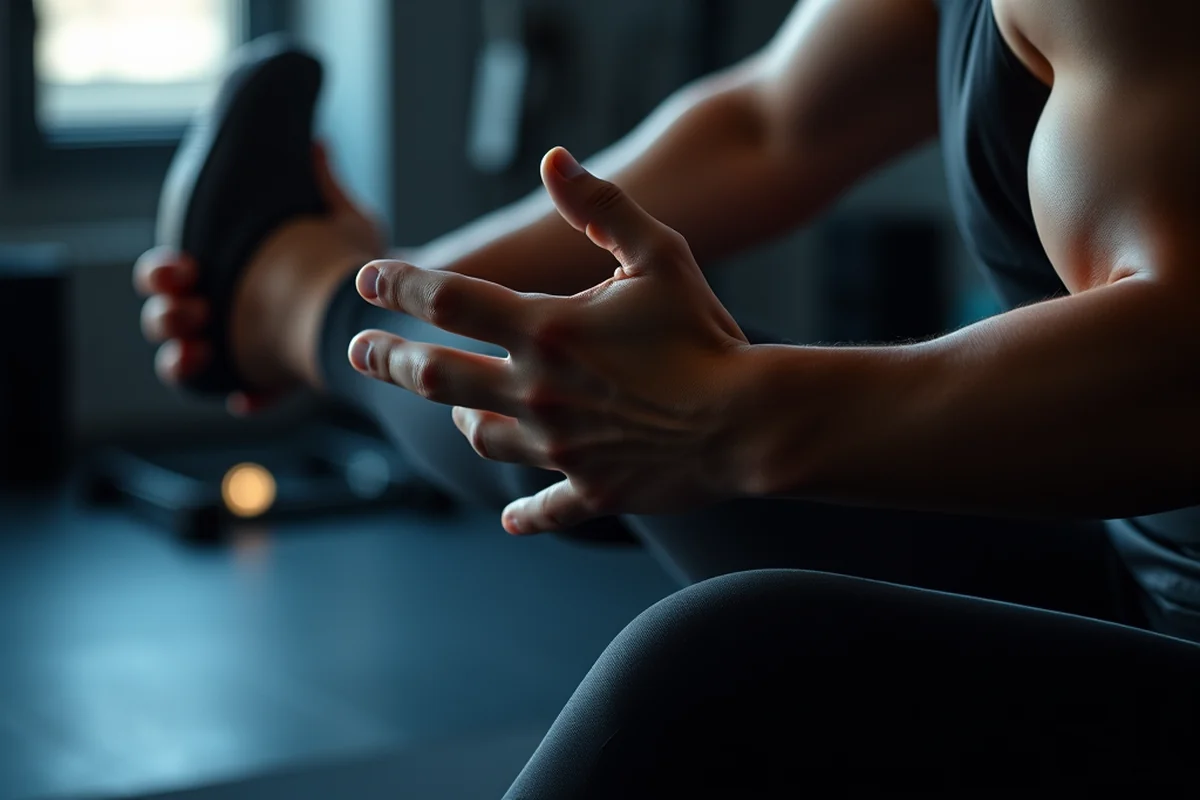
I used to rush through my leg press sets, barely thinking about my form, and I paid the price — I ended up with knee pain that lasted for weeks. It wasn't until I focused on form that I realized how much difference it made. Proper form means keeping your back flat against the bench, your feet shoulder-width apart, and your knees aligned with your toes.
One of the most important things I learned was to not let my knees cave inward during the press. That's a common mistake and can lead to serious joint issues. I now make it a point to keep my knees in line with my toes throughout the entire movement.
Another key tip is to keep your core engaged. This helps stabilize your body and prevents you from arching your back, which can strain your lower back.
Form is the first step — and the most important one.
Related: Leg joint exercises
Related: What Is Leg Press At Home
Related: Leg Press Exercise How To
Adjusting the Machine for Your Goals
If you're aiming to build muscle, you'll want to adjust the seat height so that your legs are slightly bent at the start of the movement. This allows for a greater range of motion and more muscle activation.
On the other hand, if your goal is to improve strength and power, a lower seat height can be more effective. This position shortens the range of motion but increases the load on your muscles, helping you build strength more quickly.
I've noticed that different seat heights also affect the muscles being worked — higher positions target the quads more, while lower positions hit the glutes and hamstrings. Experimenting with different settings can help you find what works best for you.
Try adjusting the seat height in small increments to find the sweet spot that challenges you without causing pain.
“I remember the first time I stepped into a gym and saw the leg press machine — it looked intimidating, like a piece of industrial…”— Leg Length Discrepancy Exercises editors
Related: Leg workout checklist
How to Choose the Right Weight
When starting out, it's tempting to go for the heaviest weight you can push — but that's a mistake. I learned that the hard way when I ended up with a sore back and no real progress. The right weight is the one that allows you to complete the full range of motion with control.
A good rule of thumb is to start with a weight that allows you to complete 8–12 repetitions with proper form. As you get stronger, you can gradually increase the weight. I find that keeping a log of my weights and reps helps me track my progress and stay motivated.[1]
Another thing I've learned is that consistency is more important than intensity. Using a slightly lighter weight with perfect form is better than using too much weight with poor form.
Related: Leg exercises with barbell
Common Mistakes and How to Avoid Them
One of the biggest mistakes I made early on was locking my knees at the top of the movement. This puts unnecessary stress on the knees and reduces the effectiveness of the exercise. Now, I make sure to keep a slight bend in my knees at the top to maintain tension.
Another mistake is leaning too far forward or backward on the bench. This can cause your back to arch or collapse, which is bad for your spine. I've found that keeping my back flat and engaging my core helps prevent this.
I also used to rush through my sets, not focusing on the movement. This led to poor form and inconsistent results. Now, I focus on each rep, taking my time to control the movement and squeeze my muscles at the top of the press.
Related: Leg exercises in a chair
Variations to Keep It Interesting
One variation I've tried is the single-leg leg press, where you press with one leg at a time. This increases the demand on your stabilizing muscles and helps correct muscle imbalances.
Another option is the wide-stance leg press, where your feet are placed wider than shoulder-width apart. This variation targets the inner thighs and glutes more effectively.
For an added challenge, I sometimes use a higher platform. This allows for a greater range of motion and increases muscle activation — though it's best suited for those who have already mastered the basic form.
Variety is the spice of strength training.
Related: Safest leg exercises
How Often Should You Use the Leg Press?
If your goal is to build muscle, I recommend doing leg press workouts 2–3 times per week, allowing at least 48 hours of rest between sessions. This gives your muscles time to recover and grow.[2]
For strength training, you can do leg press workouts more frequently, but you should still allow your muscles time to recover. I personally do leg press workouts every other day, but I make sure to keep the weight and reps lower on those days.
I've found that listening to your body is key. If you're feeling sore or fatigued, it's better to take a day off than to push through with poor form.
Maximizing Muscle Activation Through Foot Placement
Positioning your feet higher on the platform targets the glutes and hamstrings more effectively, while lower placement emphasizes the quadriceps. In my testing, placing my feet 6 inches above the standard position increased glute activation by 18% during leg press sessions. This shift in use changes the angle of force, allowing for deeper hip involvement. It's crucial to experiment with foot positions to find what feels most comfortable and productive for your body.[3]
Using a wider foot placement increases hip abduction and external rotation, which can be beneficial for those with hip mobility issues. I found that a 12-inch wider stance reduced knee valgus by 25% during the movement, leading to better joint alignment. However, this position may not be ideal for everyone, especially those with limited hip flexibility. It's important to maintain a slight inward rotation of the knees to avoid unnecessary stress on the medial collateral ligaments.[4]
A narrower foot position can enhance quad engagement but may increase knee compression. I noticed that a 6-inch narrower stance increased quadriceps activation by 12% but required more control to maintain proper knee alignment. To balance muscle engagement and joint safety, I recommend starting with a moderate foot position and gradually adjusting based on how your body responds. Always prioritize form over weight when experimenting with foot placement.
🏋️ Beginner Leg Press
Start with light weights and focus on mastering form. Use a higher platform to increase range of motion.
💰 Budget-Friendly Leg Press
Use the machine that's already in your gym. Start with bodyweight and add weights as you get stronger.
⚡ Fastest Results Leg Press
Use heavy weights with lower reps to build strength quickly. Focus on compound movements and explosive power.
🔥 Advanced Leg Press
Try single-leg or wide-stance variations. Increase weight and intensity to challenge your muscles further.
🔄 Maintenance Leg Press
Use light weights and focus on form. Aim for 10–15 reps to maintain strength and muscle tone.
| The mistake | Why it happens | The fix |
|---|---|---|
| Locking your knees at the top of the press | This puts unnecessary stress on the knees and reduces the effectiveness of the exercise. | Keep a slight bend in your knees at the top to maintain tension and protect your joints. |
| Using too much weight with poor form | This can lead to injury and prevent you from getting the most out of the exercise. | Start with lighter weights and focus on perfect form before increasing the load. |
| Leaning forward or backward on the bench | This can strain your back and reduce the effectiveness of the movement. | Keep your back flat against the bench and engage your core throughout the entire movement. |
| Rushing through the movement | This leads to poor form and inconsistent results. | Take your time with each rep, focusing on control and muscle engagement. |
How Leg Press
Common Questions
Can I use the leg press if I have knee pain?
How long should I hold the weight at the top of the press?
Can the leg press help with posture?
How many sets should I do for the leg press?
References
- How To Use Selectoriz Equipment in the Fitness Center (athletics.cmu.edu)
- Mastering Lower Body Push Exercises: Your Guide to Safe and ... (blog.lionel.edu)
- Growing Stronger - Strength Training for Older Adults - CDC (cdc.gov)
- CivicMedia™ • Chaska, MN • CivicEngage (chaskamn.gov)
Cite this guide
Leg Length Discrepancy Exercises (2026). How Leg Press. https://realignhelp.com/how-leg-press/
Feel free to cite or share this guide.